
There’s a specific smell that every gym manager knows. It’s not quite sweat, not quite rubber flooring, and not quite the lemon-scented spray someone dumped on a treadmill an hour ago in a hurry. It’s the smell of a gym that got cleaned instead of actually cleaned, every surface wiped once, fast, by someone who was handed a spray bottle on their first day and told to just make it shiny.
If that sounds familiar, you’re not alone, and it’s rarely the staff’s fault. Most gyms own decent cleaning equipment. What’s missing is knowing how to use gym cleaning equipment the way it was actually designed to be used: the right dwell time, the right pressure, the right order of operations. Get that part wrong, and even expensive machines and premium disinfectants underperform. Get it right, and a modest kit of tools can keep a 20,000-square-foot facility genuinely sanitary, not just visibly tidy.
This guide walks through the equipment most American gyms already have or should have, how to use each piece correctly, and the small habits that separate a gym that looks clean from one that actually is.
Picture two gyms across the street from each other. Gym A has a $3,000 auto-scrubber, hospital-grade disinfectant, and a fogging machine gathering dust in the supply closet because nobody ever read the manual. Gym B has a mop bucket, a case of wipes, and a manager who insists on doing things by the book. Which one has fewer member complaints about gym funk?
It’s usually Gym B, and that’s the whole point of this article. Equipment doesn’t disinfect anything by sitting in a closet, and expensive tools used incorrectly are barely better than not using them at all. A disinfectant wipe swiped across a handlebar in under a second, for instance, has typically evaporated before it ever killed anything- technically used, functionally useless.
Learning how to use gym cleaning equipment properly protects three things at once: member health, equipment lifespan, and your gym’s reputation. In an industry where a single bad Yelp review about dirty equipment can talk a hesitant new member out of signing up, that’s not a small thing.
This is the equipment gym staff touch most, and also the equipment most commonly misused. The mistake almost always comes down to speed: wiping a surface once and moving on before the product has time to work.
How to use it correctly:
A quick way to think about dwell time: it’s the difference between spraying perfume and actually taking a shower. One covers up a problem for five minutes. The other solves it.
Auto-scrubbers are the workhorses of gym cleaning equipment, and they’re also the piece most likely to be operated by someone who’s never been properly trained on it. A scrubber pushed too fast across a rubber gym floor doesn’t clean it; it just moves dirty water around and leaves streaks that turn into a slip hazard once they dry.
How to use it correctly:
Steam is popular in gyms because it disinfects using heat instead of chemicals, which is appealing for facilities cleaning upholstered benches, mats, and equipment with a lot of seams and crevices.
How to use it correctly:
Foggers earned a reputation during the pandemic as we sanitized everything, machine, and while they’re genuinely useful for covering large areas quickly, they’re also the piece of gym cleaning equipment most often used as a substitute for actual cleaning rather than a supplement to it.
How to use it correctly:
Turf lanes, front-desk carpet, and group fitness room flooring all trap sweat, dust, and chalk in ways a quick sweep won’t touch.
How to use it correctly:
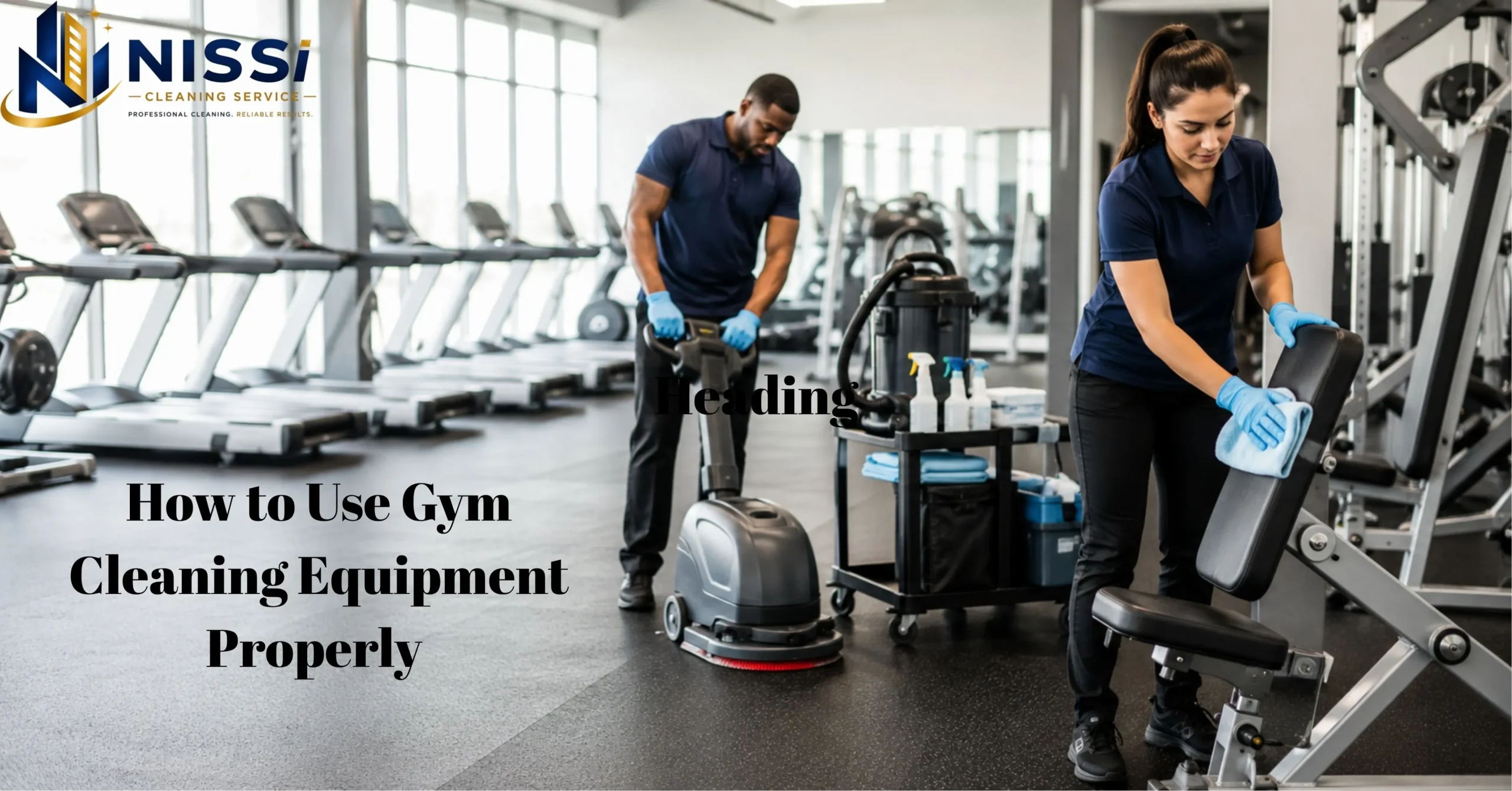
Owning the right tools is step one. Using them on a schedule that matches how your gym actually gets used is step two, and it’s the step a lot of facilities skip.
A gym that opens at 5 a.m. and stays busy until 9 p.m. isn’t going to stay sanitary on a single end-of-day wipe-down, no matter how thorough that one pass is. Realistically, most high-traffic US gyms need:
The equipment matters less than the rhythm. A gym with modest tools used on a real schedule will out-clean a gym with premium equipment used sporadically, every time.
This one’s worth repeating because it’s the single biggest reason we clean constantly, gyms still smell off by Thursday afternoon. If the label says two minutes, it means two minutes, not two swipes.
Bleach-based cleaners can crack rubber flooring and corrode chrome finishes. Always match the product to the manufacturer’s recommendations for that specific equipment.
A scrubber with a clogged solution filter or a fogger with a dirty nozzle doesn’t clean; it just makes noise. Basic maintenance on the machines themselves is part of knowing how to use gym cleaning equipment, not a separate task.
As mentioned above, fog after cleaning, not instead of it.
New hires are rarely told about dwell time, correct dilution ratios, or which machine goes with which surface. A ten-minute walkthrough on day one prevents months of half-effective cleaning.
There’s a point where DIY gym cleaning equipment reaches its limit, not because the tools are wrong, but because staff are stretched between checking members in, running classes, and trying to keep the facility spotless at the same time. Something usually gives, and it’s rarely the front desk.
That’s the gap a dedicated commercial cleaning team fills. A crew trained specifically on fitness facilities knows the dwell times, the equipment-safe products, and the order of operations without needing a refresher every shift, and they show up on a schedule that doesn’t compete with your staff’s other responsibilities.
If your gym is at that point, where equipment sits half-used and staff are stretched thin, our gym cleaning services are built around exactly this kind of facility: equipment, locker rooms, and studio floors sanitized around your peak member hours, not in spite of them. You can see the full range of spaces we service on our commercial cleaning services page, or get in touch for a walkthrough and a straightforward quote.
Gym cleaning equipment isn’t complicated, but it is easy to use badly, and badly often still looks fine to the naked eye, which is exactly why the mistake sticks around so long. A wiped-down bench looks the same whether the disinfectant sat for ten seconds or two full minutes. The difference only shows up in what’s actually left on the surface after members touch it.
Learning how to use gym cleaning equipment the right way isn’t about buying fancier machines. It’s about respecting dwell times, matching products to surfaces, keeping the equipment itself maintained, and building a schedule that matches how busy your gym actually gets. Do that consistently, and the gym smell everyone jokes about stops being a given and starts being something members simply don’t notice, because there’s nothing there to notice.
High-touch machines should be wiped after every use, with a full disinfectant pass at least once daily in busy facilities.
Skipping dwell time, wiping surfaces before disinfectant has had enough contact time to actually kill germs.
No. Fogging works best after surfaces are already wiped clean, not as a replacement for regular cleaning.
Disinfectant wipes, a sprayer, microfiber cloths, and a basic floor scrubber cover most small facilities’ core needs.
Often yes, it frees staff for member-facing work and ensures cleaning is done consistently and correctly.